Chart, Graph, Diagram: Understanding 'Diagramm' in English
For German speakers, the word "Diagramm" is a versatile term, encompassing a broad spectrum of visual representations. However, translating "Diagramm" directly into English isn't always a one-to-one mapping. The English language offers several specific terms—such as 'chart,' 'graph,' 'diagram,' and 'figure'—each with its own nuances and common usage. Understanding these distinctions is crucial for accurate communication, whether you're presenting data, explaining a technical concept, or simply trying to express yourself clearly in English. This article will demystify the English equivalents of "Diagramm," explore their specific contexts, and provide practical guidance on how to describe them effectively.
The Nuances of "Diagramm": Chart, Graph, Diagram – and Beyond
When encountering "Diagramm" in German, the most common English translations you'll likely consider are 'chart,' 'graph,' and 'diagram.' While often used interchangeably in casual conversation, each word carries a distinct meaning in more formal or technical contexts.
1. Diagram
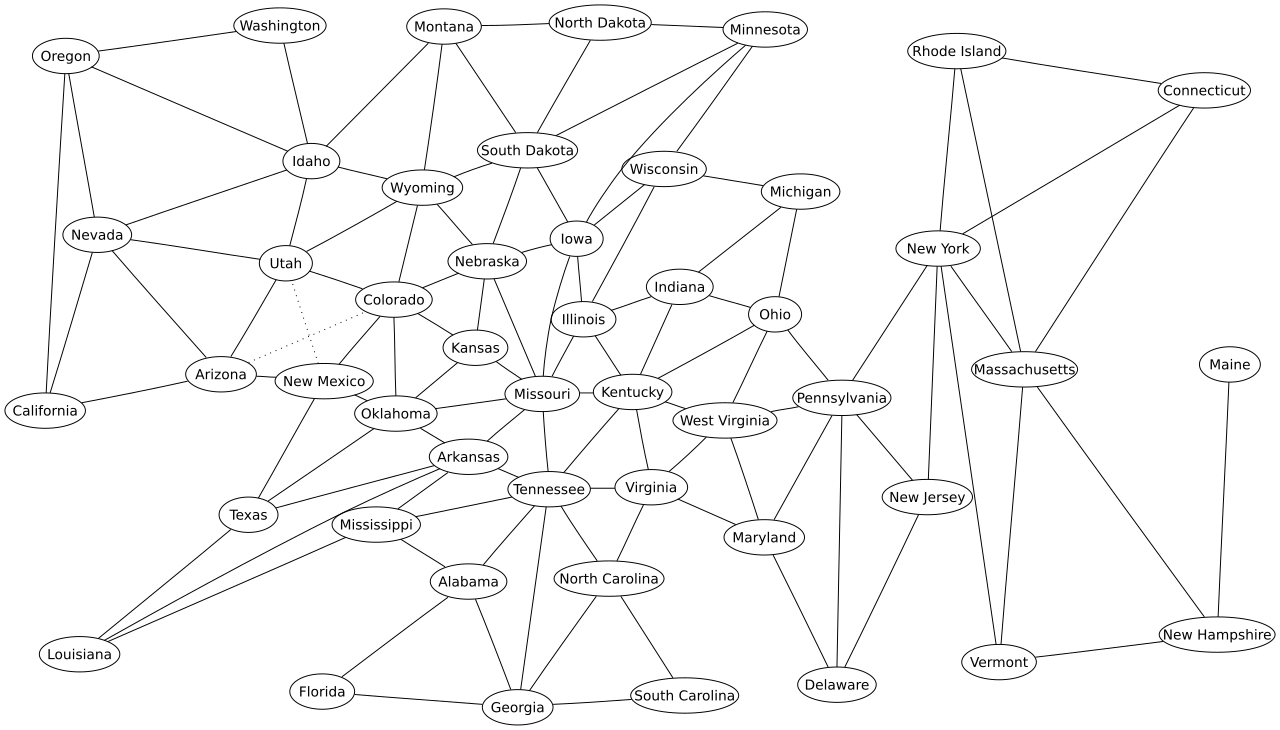
The term 'diagram' in English is perhaps the broadest equivalent of "Diagramm." It typically refers to a simplified drawing showing the appearance, structure, or workings of something; a schematic rather than a realistic picture. It's often used for:
- Technical drawings: Such as a stress-strain diagram (Spannungs-Dehnungs-Diagramm) in engineering, an iron-carbon diagram (Eisen-Kohlenstoff-Diagramm) in metallurgy, or a timing diagram (Timing-Diagramm) in electronics. These illustrate processes, relationships, or structures.
- Flowcharts and schematics: An organizational chart, a wiring diagram, or a process flow diagram.
- Abstract or logical representations: A logical diagram (logisches Diagramm) illustrating relationships between concepts.
When something "illustrates the statistics nicely," you might use "diagram" if it's a general visual representation, but 'chart' or 'graph' might be more specific. For instance, "
The diagram illustrates the statistics nicely" (Das Diagramm veranschaulicht die Statistik gut) is acceptable, but often 'chart' would be preferred for statistics.
2. Chart
'Chart' is primarily used for presenting discrete data sets, comparisons, and trends over time, especially in business, finance, and general statistics. Think of it as a tool for data visualization where the focus is on showing quantities or frequencies. Common types include:
- Bar charts: Comparing different categories (e.g., sales figures by region).
- Pie charts: Showing proportions of a whole.
- Line charts: Illustrating trends over time (e.g., stock prices over a month).
- Gantt charts: (Gantt-Diagramm) Specifically for project scheduling and task management.
- Excel charts: (Excel-Diagramm) Any visual representation created using Microsoft Excel's charting functions.
Phrases like "
The chart lays out the details extensively" (Das Diagramm legt ausführlich die Details dar) almost always refer to a 'chart' when discussing business data or statistics. Similarly, an "
einfaches Diagramm" (simple chart) or a "
graphisches Diagramm" (graphical chart) in a business report would likely be a 'chart'.
3. Graph
'Graph' is most commonly associated with mathematical functions, scientific data, and showing relationships between variables on a coordinate system. It implies a more precise, often quantitative, representation. You'll typically encounter graphs in:
- Science and mathematics: A path-time diagram (Weg-Zeit-Diagramm) is typically a path-time graph, illustrating how distance changes with time. A force-distance diagram (Kraft-Weg-Diagramm) is also often a force-distance graph.
- Data analysis: A trend graph (Trend-Diagramm) showing a continuous change, or a scatter plot.
- Engineering: Displaying experimental results or theoretical curves.
While you might use 'chart' for a line chart showing sales trends, you'd almost exclusively use 'graph' for a curve depicting a physical phenomenon.
Beyond the Big Three: Figure, Plot, and Schema
- Figure: This is a very broad term, especially in academic and scientific writing. It can refer to *any* visual element in a document – be it a photo, map, chart, graph, or diagram. When you say "as shown in the diagram" (wie das Diagramm zeigt), in a scientific paper, it might be "as shown in the figure."
- Plot: More specific than 'graph', 'plot' often refers to a graph generated from data points, particularly in statistics or data visualization software (e.g., a scatter plot, a bar plot).
- Schema: While 'schema' can sometimes translate to "Diagramm" (as in a conceptual schema), its plural forms 'schemata' or 'schemas' are more commonly used for frameworks, outlines, or abstract representations rather than direct data visualizations.
The key takeaway for "Diagramm Englisch" is context. The specific field, the type of information being presented, and the visual style will all influence which English term is most appropriate.
Deconstructing "Diagramm": Common Types and Their Contexts
Let's look at more specific examples from the German "Diagramm" and pinpoint their common English counterparts:
- Spannungs-Dehnungs-Diagramm: Almost always stress-strain diagram. Clear technical context.
- Weg-Zeit-Diagramm: Most commonly path-time graph or path-time diagram, emphasizing the relationship between two continuous variables.
- Gantt-Diagramm: Universally known as a Gantt chart in project management.
- Excel-Diagramm: An Excel chart, given its software origin.
- Kraft-Weg-Diagramm: Typically force-distance graph or force-path diagram.
- Timing-Diagramm: A timing diagram in electronics.
- Trend-Diagramm: Often a trend graph or trend chart, depending on the data's nature and continuity.
- Logisches Diagramm: A logical diagram, representing abstract relationships.
- Bildliches Diagramm: A visual chart or visual diagram, emphasizing its graphical nature.
- Graphisches Diagramm: A graphical chart or graphical diagram.
- Messwert-Diagramm: A measurement diagram or measurement chart/graph, depending on the specific representation of the measured values.
You'll notice that for terms like "unteres Diagramm" (bottom diagram/chart/graph) or "dieses Diagramm" (this chart/graph/diagram), the choice depends entirely on the specific type of visual aid being referenced in that particular document.
Mastering the Art of Describing a "Diagramm" in English
Once you've correctly identified your 'chart,' 'graph,' or 'diagram,' the next challenge is to describe it accurately and effectively in English. The goal of describing a visual representation is to enable a listener or reader to understand its key information and message without actually seeing it. This skill is vital in academic presentations, business meetings, and technical reports.
Here’s a structured approach to describing a "Diagramm" in English:
1. The Introduction: Setting the Scene
Start by providing an overview.
- Identify the type: State whether it's a bar chart, pie chart, line graph, flow diagram, etc.
- State the topic/subject: What does the visual represent? (e.g., "This bar chart illustrates the percentage of renewable energy sources in European countries in 2022.")
- Mention key components: Briefly describe the axes, legends, or main sections. (e.g., "The x-axis shows the countries, while the y-axis represents the percentage.")
- Provide source details (if applicable): Include the publication, author, and date. (e.g., "The data is sourced from Eurostat, published in their annual energy report on January 15, 2023.")
2. The Main Body: Factual Description and Key Observations
This is where you delve into the details, focusing purely on what the visual *shows*.
- Highlight significant trends: Describe increases, decreases, fluctuations, or periods of stability. Use precise verbs like 'rose sharply,' 'declined steadily,' 'remained constant,' 'peaked at,' 'bottomed out at.'
- Compare and contrast data: Point out the highest and lowest values, significant differences, or similarities between categories. Use comparative language like 'significantly higher than,' 'in contrast to,' 'roughly equal to.'
- Reference specific data points: Mention exact figures or ranges where relevant. (e.g., "Country X shows the highest adoption rate at 45%, whereas Country Y lags with only 12%.")
- Maintain an objective tone: Crucially, avoid personal opinions, interpretations, or assumptions. Stick strictly to the facts presented in the visual. Your job is to report, not to analyze or persuade in this section. For more on this critical rule, see Writing English Diagram Descriptions: The Rule of No Opinion.
- Use appropriate tenses: If the visual depicts current facts or general truths, use the present simple tense. If it shows past events or trends, use past tenses.
3. The Conclusion: Summarizing Key Findings
Conclude by summarizing the main message or the most important takeaway from the visual, strictly based on the objective observations you made in the main body.
- Reiterate the overall trend or finding: (e.g., "In summary, the chart clearly indicates a growing disparity in renewable energy adoption across European nations.")
- Reinforce objectivity: Ensure your conclusion remains factual and free of personal bias.
For a more in-depth guide on structuring your descriptions and accessing helpful vocabulary, consult
How to Describe Diagrams in English: Structure & Key Tips.
Conclusion
Navigating the various English translations for the German "Diagramm" requires a keen eye for context and a solid understanding of each term's specific application. Whether you need a 'chart' for business data, a 'graph' for scientific relationships, or a 'diagram' for a technical schematic, choosing the right word enhances clarity and professionalism. Furthermore, mastering the art of describing these visuals in English—with a clear structure, objective language, and an avoidance of personal opinion—is an invaluable skill for anyone communicating in an international context. By applying these insights, you can confidently translate and discuss complex visual information, ensuring your message is understood precisely as intended.